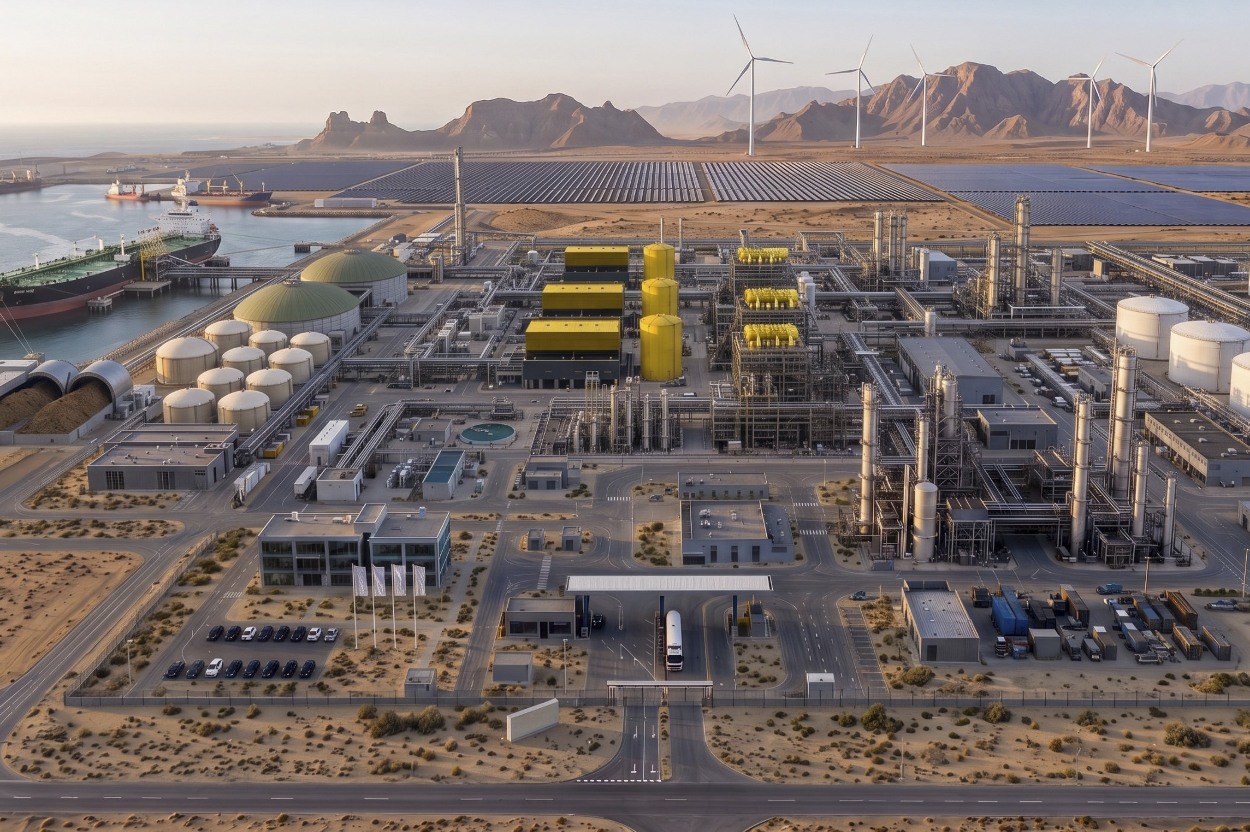
Uniper has agreed to buy 40,000 tonnes a year of synthetic sustainable aviation fuel (eSAF) from Arcadia eFuels’ proposed Danish plant for more than a decade, GreenAir News reported. The deal comes alongside development and financing milestones for synthetic fuel projects in Europe, Africa, the US and China, although several proposed facilities remain some years from production.
Arcadia’s Project ENDOR in Vordingborg is awaiting a final investment decision, having secured EU Innovation Fund grant support in March. Arcadia describes the Uniper contract as legally binding, but deliveries depend on agreed conditions being met and the plant entering commercial operation. Its current schedule envisages supply beginning in the early 2030s. Uniper said the agreement would broaden its low-carbon products portfolio and secure access to eSAF compliant with renewable fuels of non-biological origin requirements.
In Morocco, Switzerland’s Synhelion has signed a memorandum of understanding with the government for a commercial facility designed to produce 100,000 tonnes annually of renewable jet fuel, diesel and gasoline. The company says it has reserved a site in Guelmim-Oued Noun. Meanwhile, fellow Swiss developer Metafuels has teamed up with MB Energy on market access, blending, infrastructure, logistics and certification for its Turbe project at Rotterdam, where production is planned from 2030 onwards. MB Energy could also supply methanol feedstock under a proposed arrangement.
South Africa’s Phelan Green says it has reached a final investment decision on the first, 35,000-tonne phase of its Hopefield eSAF project near Saldanha Bay. According to GreenAir News, construction is expected to start in the first quarter of 2027, with production targeted for 2029. The three-phase development is projected to reach annual output of 140,000 tonnes in 2032. Phelan Green links the project to European demand arising from the synthetic fuel blending sub-mandate.
In the US, Twelve has secured a $45 million refinancing facility for AirPlant One in Moses Lake, Washington, supporting further expansion. The company says the plant is now producing on-spec aviation fuel and naphtha using CO2, water and renewable electricity. China’s Carbonology has begun building a 1,000-ton direct-air-capture-to-eSAF pilot plant in Ningdong, intended to test process integration and improve efficiency and costs. Separately, Carbon Neutral Fuels and Energy Estate’s BioNQ Developments have signed a memorandum to assess a North Queensland SAF project using sugarcane agricultural waste.